
When I was a freshman in college, a national lottery was held to determine the fate of millions of young American men. The war in Vietnam required hundreds of thousands of soldiers, and enthusiasm for joining the army had waned. Conscription covered the shortfall of volunteers.
Congress had recently changed the law that allowed college students to defer eligibility for the draft. For the first time, they were included in the annual draft lottery. I remember walking around campus that day. It was warm and windows were open in the dormitories. Every so often a shout of joy would come from one of the dorms, as a young man discovered that he had drawn a high number, effectively exempting him from the draft. From other windows came groans of dismay. Low numbers meant these fellows would be drafted first. Vietnam, rather than college, would be where they would spend their next year.
I received a middling number, low enough to require going through the draft physical and other processing, but high enough that I wasn’t actually drafted for service.
I wasn’t the only person at the time to ponder the existential significance of a lottery that sent thousands of men to their deaths and left others to live their lives as before. Was life really such a crapshoot?
No, said many. The lottery might have appeared random from a human perspective, but God decided who got which numbers. God had his reasons, unknowable though they were to mortals.
These conflicting interpretations of seemingly chance events have been dueling for thousands of years. For most of that time, part of the duel has taken place in the context of lotteries or their equivalent.
Ancient Chinese, Indians and Egyptians all tossed coins or dice or other such items to divine—note the choice of verbs—the future. In each case a connection was drawn between the outcome of the toss and the intentions of the gods. Probably then as now, some people took the heavenly connection more seriously than others.
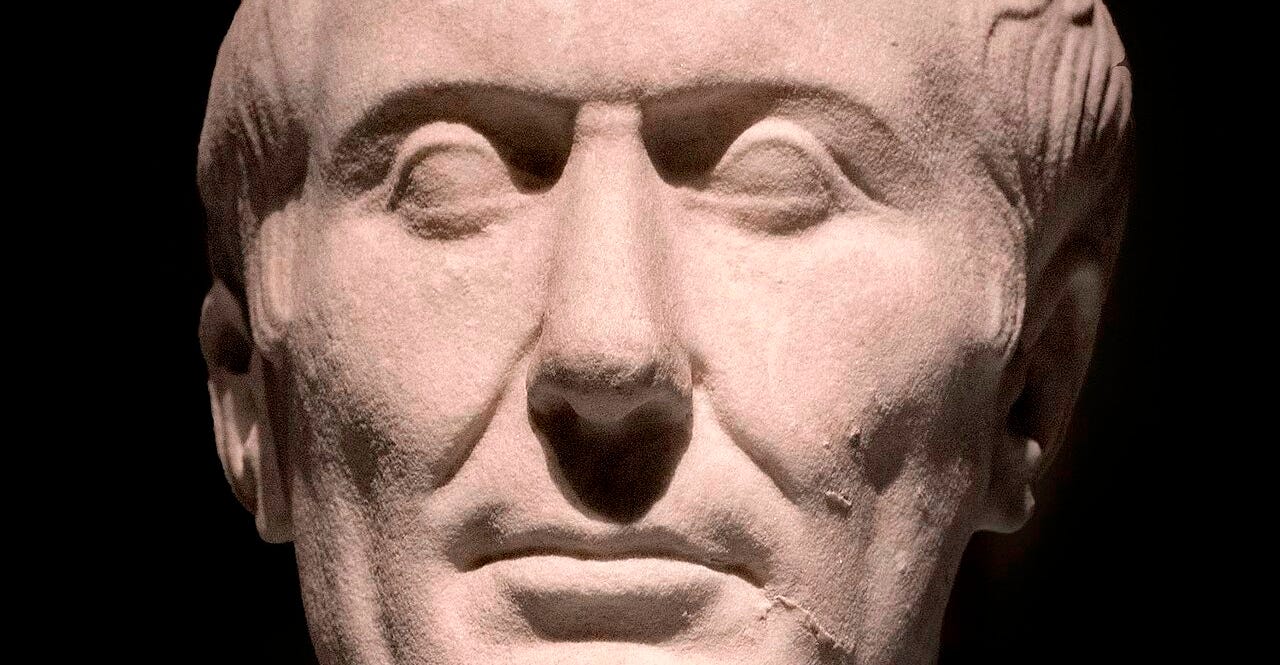
Julius Caesar is said to have declared, “The die is cast,” before crossing the Rubicon. Caesar’s contemporaries were known to cast dice for guidance, but he seems to have been speaking metaphorically. Possibly he didn’t even say the words, which would have been in Latin or Greek anyway. Yet Suetonius and Plutarch reported them, and their readers would have drawn their own conclusions.
The Greeks improved on dice for their decision-making. Athenians employed chance to select jurors and other civil officials. The kleroterion was a gizmo that matched the names of citizens with randomly chosen numbers, in a method not unlike that used for the draft lottery in America in the 1970s. The thinking behind the system was democratic rather than religious. Maybe fate played a role in the selection of this citizen or that, but the general philosophy was that the responsibilities of citizenship were something any citizen could and should fulfill when called upon.
Randomness and fate pop up as twins again and again in history. The gospels say the soldiers at the crucifixion of Jesus cast lots for his garments. Matthew asserts that this was in fulfillment of a prophecy from the book of Psalms, where something similar happened to David.
In Texas history, a Texan invasion of Mexico in the early 1840s led to the capture of 176 of the invaders. An initial Mexican order that all the prisoners be executed was modified to require the death of every tenth man. A jar was filled with beans: 17 black ones and 159 white ones. The prisoners were compelled to draw, and the ones who pulled the black beans were killed.
Lotteries in America today are less fraught. The most conspicuous produce good news that someone has won a pile of money. Some winners thank God. Others thank their lucky stars—which once meant much the same thing.
Ritual randomness still lives in our most solemn ceremonies. Each Super Bowl begins with a coin toss.
Most informative as usual. You wrote: "An initial Mexican order that all the prisoners be executed was modified to require the death of every tenth man." Is this related to the term "decimate"?
My number was 23. But it was the last year the Vietnam lottery was used...solely as a precautionary measure in case the war didn't end...which it did. Nice reference to the kleroterion btw!