Home or away?
Where's the advantage in war?

Winston Churchill related a story that revealed the indomitable spirit of the British people amid the Battle of Britain in 1940. Britain was the last country standing against Germany, and it suffered nightly bombardment from the air. A visitor to London asked a bus conductor how things were going. “It’s all right, sir,” the conductor replied. “We’re in the final, and it’s being played on the home ground.”
In sports, playing on the home field is usually an advantage. The crowd is supportive. The facilities are familiar. No travel has disrupted daily routines.
Does the same principle apply in war, as Churchill’s bus conductor seemed to believe?
The historical record yields a mixed answer. American military forces fought eleven regular wars—extended engagements against other countries—between 1776 and the beginning of 2026. Two were at home and nine were away. Of the two home wars, America won the Revolutionary War and tied the War of 1812. Of the foreign wars, it won against Mexico in the 1840s, Spain in the 1890s, Germany in the 1910s, Germany and Japan in the 1940s, and Iraq in 1991. It tied in Korea in the 1950s and arguably in Iraq in the 2000s and 2010s. It lost in Vietnam in the 1960s and 1970s and in Afghanistan in the 2000s to 2020s.
So the scorecard shows a home record (wins-losses-ties) of 1-0-1, and an away record of 5-2-2. America has a better win percentage on the road.
Further scrutiny is required.
The American victory in the Revolutionary War confirms the bus conductor’s intuition. America was the home team, and all it had to do to win was stay in the field until the British tired of fighting and went home. Which is what happened.
The same reasoning explains why America lost in Vietnam and Afghanistan. America was the visiting team with an option to leave without grave damage to itself. Eventually American leaders came to the same conclusion British leaders reached after Yorktown.
Sometimes, therefore, the home field advantage can be decisive.
But not always. When the visiting team is much stronger than the home team and is determined to win even at great cost, that strength and determination can outweigh the home field advantage. America was much stronger than Mexico, Spain and Iraq in its wars against those countries. With the aid of its allies, America was much stronger than Germany in the First World War and than Germany and Japan in the Second World War.
The American Civil War is a special case, being a domestic conflict. But it tends to support the conclusion that strength and determination can beat home field advantage. Nearly all the fighting took place in the South, making it the logistical equivalent of a foreign war for Northerners. Yet the North won, chiefly because its resources, including manpower, greatly exceeded those of the South, and Northerners were determined to push to victory.
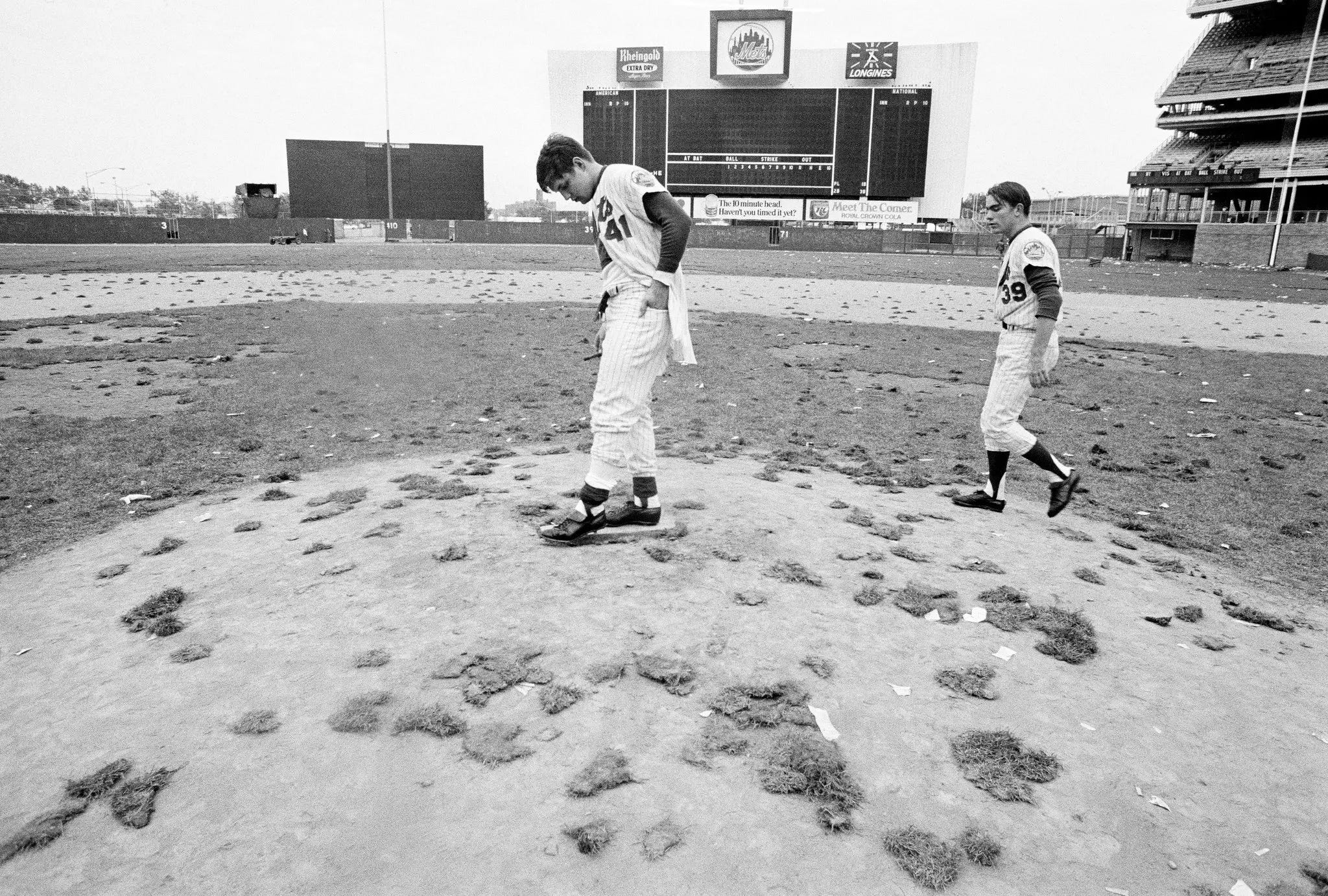
On the whole the American experience suggests it’s better to be the visiting team in war than the home team. With the exception of New York’s old Shea Stadium, where fans celebrated signal victories by tearing up the turf, sports fields usually survive games more or less untouched. Not so in war. The theaters where the fighting occurs can be ravaged. William Sherman’s march to the sea from Atlanta demonstrated this in the Civil War. The strategic bombing of Germany and Japan did the same in the Second World War.
If the fighting occurs on foreign fields, a war can have the effect of boosting economic growth at home. The Civil War accelerated the industrial revolution in the North. The Second World War pulled the American economy out of the Great Depression and rocketed America to an economic lead over other countries that has lasted until today.
There was a negative, comparative aspect of the boosting, too. The destruction of the Civil War set the Southern economy back decades compared with the North. The flattening of German and Japanese factories magnified America’s economic advantage after 1945.
Churchill’s bus conductor was making a virtue of necessity in praising the home field. Americans, given a choice in the matter, should stick to playing away.
But no mention of the photo! Tom Seaver and Gary Gentry in Shea Stadium looking at the pitching mound after a celebratory home crowd took souvenir pieces of the grass after the Mets won either the league championship or the world series. This was 1969.
Sun Tzu might have said: "The wise commander chooses neither home nor foreign ground. He chooses ground already won in the mind of his adversary."